Hello, Amigos!
For ESOL tutors or teachers in schools with a multicultural population: Create a poster with hands of different colors and write on each hand the word hello in a different language. Greet the children, saying "Hola, amigos" and introduce yourself, giving brief background. Then ask students to introduce themselves and to say hello in their native languages if they can. This is a nice icebreaker, and the children enjoy learning to say hello in different languages.
Cynthia de Leon, Yolanda Heredia, Manatee Elementary School, Naples, Florida
Chrysanthemum's Graph!
Read the book Chrysanthemum, by Kevin Henkes, to the class. Talk about the main character's name and how her parents made the decision to name her. Discuss with the children, if they know, how they received their names -- for example, it was a family name, their parents liked the name, etc. Discuss the length of Chrysanthemum's name. How many letters are in each of your students' names? Give children pieces of large-block graph paper or have them draw boxes to show the number of letters in their names. Transfer the data to a class Number of Letters in Our Names graph. Teachers should include their names too!
Eileen Hayes, Comprehensive Grammar School, Methuen, Massachuestts
We Are All Unique!
| Checkout the first part of this post bellow! |
|
Invite students to list some traits that make them unique. From that list, I create a bingo-like card with a square for each student; I write one fact from each student's list in one of the squares. Then the fun begins! Students must ask one another if they "sleep with a stuffed lizard" or another question that relates to the information in one of the squares. When students identify the person who matches the information in a square, that person writes his or her initials in the box. Set a time limit and see who collects the most initials before time runs out. We learn some very interesting things about one another. This activity reveals commonalities and creates lively conversation!
Brenda W., Silverwood School, Silverdale, Washington
Sticker Partners!
Each student is given a sticker to put on his or her hand upon entering the classroom, but students aren't told what the sticker is for until the time is right! Be sure there is a partner (matching sticker) for every student. Ask students to find their partners and interview them (name, grade, hobbies, etc.). Each interviewer is responsible for introducing each interviewee to the rest of the class. You might find that students find it less threatening when someone else shares information about them than when they are asked to share about themselves.
Grade 4-6 team, Silverwood School, Silverdale, Washington
Me Bag
Place a white paper bag on each desk on the morning of the first day. The bags should contain pencils, name tags, and other items students will need to help get the class organized. Also include a letter introducing yourself, telling of hobbies, etc. The students then empty their bags and decorate the Me Bags with pictures from magazines or drawings that represent themselves. You shoulld already have completed a sample Me Bag with pictures and drawings representing yourself. Students love to hear about their teacher! Then students share their Me Bags to help class members get to know one another. That afternoon, the students take their decorated Me Bags home and put inside any special or important objects. You might share a few items from your bag as examples. The students keep their objects secret until the next morning when they share with the class. They're very excited to tell about the special things they placed in their bags and why they are special! From this bag can stem some neat writing assignments or coloring activities, depending on kids' ages.
Billi Walton, Addeliar Guy Elementary School, Las Vegas, Nevada
Kelly Horn, Kentucky
Candy Gets Kids Talking!
Note: Before preparing or distributing any food in the classroom, make sure you are aware of children's allergies or dietary restrictions and caution children about choking hazards.
Bring in Skittles, one of your students' favorite candies for sure! (Another favorite, M&Ms, are an option.) Tell the kids to take as many as they want. Most are pretty apprehensive -- after all, it's the first day of school! -- so they usually take about ten to 15 Skittles. You should take some too. Next, pick out some fun music. For each Skittle they took the students must say one thing about themselves while moving to the music. You demonstrate first, of course. An option: Each color of candy represents a category students must speak about. Example: orange = scary memories, red = great vacations, green = something about your family, blue = favorite hobbies, etc. The activity is a real icebreaker, and the kids love it! After that, they feel comfortable, and the class is no longer quiet.
Laura MacDonald, Big Creek Elementary School, Berea, Ohio
Brandy Woolbright, Education Student, Lake Land College; Mattoon Illinois
Take As Much As You Want!
During the first circle time activity, have a roll of toilet paper on hand! Explain to the children that they will need this for the next activity. Tell students that you're going to pass around the roll. Invite students to take as much as they want. One middle school-high school math teacher invites students to "take as much as you need to complete the job." She doesn't tell them what the job is though! After everyone has had a good laugh over the amount of paper they took, explain how the game works. For every piece of toilet paper the students ripped off, they must tell the class one thing about themselves. Some realize they took quite a bit of toilet paper, but with a little prompting and probing from the teacher, they will find things to share. In the math teacher's class, students have to say what their favorite thing about math is when they get to the last piece. This activity provides a nice way to find out about students' personalities, families, likes, and dislikes -- and the students really love it!
Jennifer Tonzi, Southern Cayuga Central School, Poplar Ridge, New York
Elizabeth Popkin, Meadowbrook Elementary School, East Meadow, New York
Brandy Woolbright, education student, Lake Land College, Mattoon Illinois
Paper Dolls!
Have students cut out paper dolls. Each doll is 2 feet tall, and all are alike in the beginning. Then students "dress" their dolls by coloring or making clothes out of fabric, wallpaper, etc. Tell them to leave the face portion blank. While students dress their dolls, I use the digital camera to take pictures of all of them. We crop the pictures so that we see only faces, blow them up to fit the paper dolls, and students glue their faces to the dolls. We laminate them and hang them in the entrance to the classroom across from each child's coat cubby. It is a colorful display, helps kids find thier cubbies, and appears to be a quiet class standing in line. Students and parents love them! At the end of the year, students take their dolls home.
Phyllis Diggins, Rochester City School #12, Rochester, New York
Where Do I Sit?
Make cutouts of apples. Cut each apple in a zigzag, like a puzzle piece. Place one side of the piece on each desk in the room. As the children line up to come into the classroom, give each of them one half of an apple puzzle. The children find their desks by matching the piece they are holding with the rest of the puzzle on a desk. (You might find it easier to write a number on the back of each piece; the numbers will help you locate the correct matching apple if a child is having difficulty finding his or her spot.) This activity has the children sitting in desks randomly and not with friends.
Eileen Hayes, Comprehensive Grammar School Methuen, Massachusetts
The Me Shield
For this activity, we use a copy of a banner from a Red Cross education program, drawn like a shield and divided into four sections. We pose seven questions students can answer about themselves:
- What are three things you are good at?
- What do you like most about your family?
- What do your friends like about you?
- What do you think you can do better than almost anyone else your age?
- What do you dream about doing one day?
- What is something you have already done that makes you feel really good?
- What is one thing you are planning to change about yourself so you will be even better?
Each student writes his or her name at the top of the paper and answers four of the seven questions, one answer per section, on the banner. Students can write their answers or use a combination of art and writing to express themselves. The students volunteer to share their banners, and the teacher can proudly display them after the students have had a chance to decorate them.
Debra Israel, Garfield School, Oakland, California
The Kindergarten What Is Your Name Game?
Use the Hap Palmer song "What is Your Name?" for this activity. Point to each student as it is his or her turn to respond. Then each student is given a name card to place on a What is Your Name? chart. We read the chart together with their names -- a first reading experience in the classroom for many kindergartners! Later in the day, we place all the name cards on the floor, and with the children seated on the floor in a circle, we have a name search. One child at a time comes to the floor to select his or her name. If the child have trouble identifying it, I have a duplicate and will show it to to the child. Kids really enjoy all the activities using their names.
Gail Wells, East Laurens Elementary School, Dublin, Georgia
The Thinker!
Note: Before preparing or distributing any food in the classroom, make sure you are aware of children's allergies or dietary restrictions and caution children about choking hazards.
On the first day of school, many teachers like to stress to students that not everyone thinks alike. I say the word cornfield, and I ask the children to think of the first thing that comes to mind. Some will say they think of a cornfield they've driven by. Some have never been near one and recall a picture of one, etc. Place a special chair somewhere in the classroom. Organize students into groups of about six. Tell them that the group that comes up with the highest number of unique ways to sit in the chair will win candy. Each group sends a different representative to demonstrate a unique way to sit in the chair. I keep score on the board. Inevitably, someone says, "This could go on forever!" At that point, we discuss whether anyone's way was better or more correct than another's way. We discuss that everyone can come to conclusions and solve problems in their own way, and that no one's way is necessarily wrong or right. We think of examples in television commercials: Pizza Hut's "eating your pizza crust first," "How do you eat a Reese's?," or "How do you eat your Oreo?," etc. Of course, all students will get a piece of candy -- they're all winners!
Lauren Elizabeth Rocereta, Cheatham Hill Elementary School, Marietta, Georgia
Circle of Foods
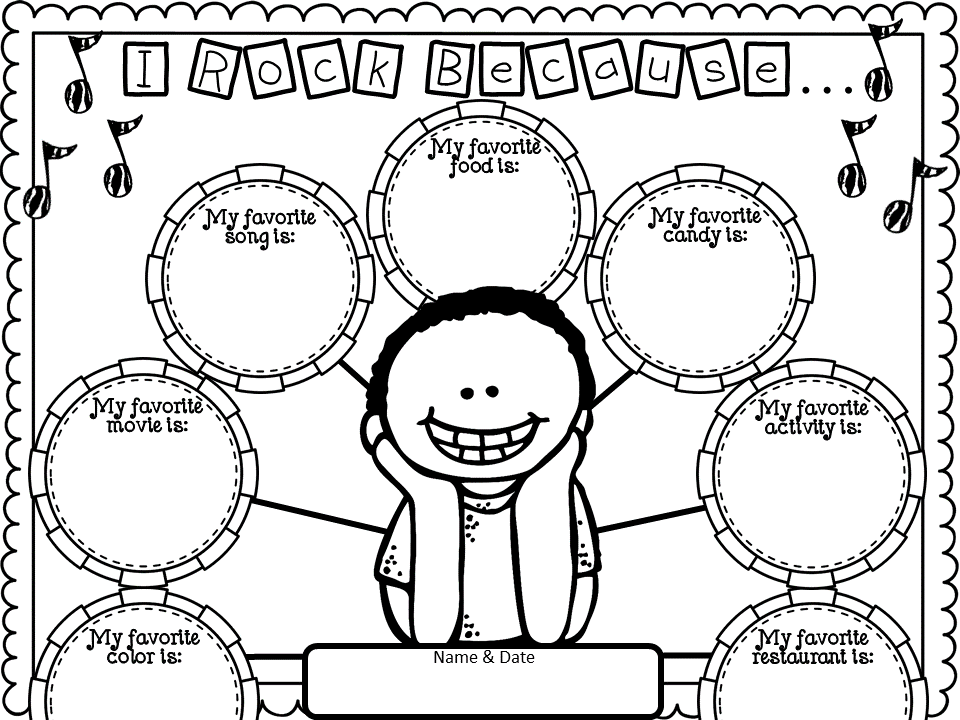
This activity helps teachers get to know their students while providing insight into healthful eating habits as a lead-in to health lessons! In a circle, the first child begins "My name is ____, and my favorite food is ____." The next person in the circle then has to introduce herself or himself and the previous person to see whether they have been listening. The activity builds as each child takes a turn!
Ann Edgar, Thornlie Primary School, Western Australia
What Are Your Goals?
Teachers of older students might welcome students to class by having them write short essays answering questions that might include the following:
- Who are you?
- Why are you here?
- What are your short-term goals?
- What are your long-term goals?
- What do you plan on accomplishing while you are here?
- What obstacles do you have and how can you meet your goals?
This activity gives students -- and teachers -- a diagnostic tool, a self-motivating statement, and a good feeling for being in school.